

Exploring the realm of smart farming technology and its impact on agriculture opens up a world of innovation and efficiency. Let's delve into how this cutting-edge technology is reshaping traditional farming practices and paving the way for a more sustainable future.
The Impact of Smart Farming Technology
Smart farming technology has revolutionized traditional farming practices by introducing innovative tools and techniques that enhance efficiency and sustainability in agriculture. These advancements have significantly transformed the way farmers operate and manage their crops and livestock.
Smart Farming Tools and Benefits
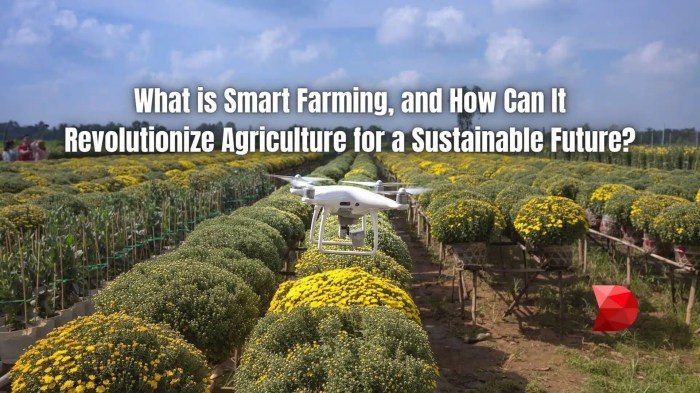
Smart farming tools such as drones, sensors, and automated machinery have become essential in modern agriculture. Drones equipped with cameras and sensors can provide real-time aerial imagery of fields, allowing farmers to monitor crop health and detect issues such as pest infestations or nutrient deficiencies.
This data enables farmers to make informed decisions and take timely actions to optimize crop yield and quality.Sensors placed in the soil or on plants can collect vital data on moisture levels, temperature, and nutrient content, helping farmers to precisely manage irrigation and fertilizer applications.
Automated machinery like robotic harvesters and tractors equipped with GPS technology can streamline farming operations, reducing labor costs and minimizing environmental impact.
Advantages of Smart Farming Technology
The utilization of smart farming technology offers numerous advantages for farmers. One key benefit is increased efficiency, as these tools enable farmers to monitor their fields more effectively, detect problems early, and respond promptly. This leads to higher crop yields, reduced waste, and improved resource management.Moreover, smart farming technology promotes sustainability by minimizing the use of chemicals, water, and energy through precise and targeted applications.
By optimizing inputs and reducing environmental impact, farmers can create more resilient and eco-friendly agricultural systems that are better equipped to withstand challenges such as climate change.In conclusion, smart farming technology has a transformative impact on agriculture by enhancing productivity, sustainability, and profitability for farmers.
By embracing these innovative tools and techniques, farmers can meet the growing demand for food production while minimizing the negative effects on the environment.
IoT and Data Analytics in Agriculture
IoT devices and data analytics have significantly transformed the agricultural sector by enabling farmers to make data-driven decisions and optimize their operations.
Role of IoT Devices in Agriculture
IoT devices, such as sensors and drones, are used in agriculture to collect data on various parameters like soil moisture levels, temperature, humidity, and crop health. These devices are interconnected through a network, allowing real-time monitoring of agricultural conditions.
Data Analytics in Agriculture
Data analytics plays a crucial role in processing the vast amounts of information collected by IoT devices. By analyzing this data, farmers can gain valuable insights into crop performance, pest infestations, disease outbreaks, and weather patterns. This information helps in identifying trends and making informed decisions to improve yields and reduce risks.
Optimizing Decision-Making with Real-Time Data Analysis
Real-time data analysis allows farmers to monitor their crops continuously and respond promptly to any issues that may arise. By using advanced analytics tools, farmers can predict potential problems, adjust irrigation schedules, optimize fertilizer usage, and even automate certain tasks.
This proactive approach enables farmers to maximize productivity while minimizing waste and environmental impact.
Precision Farming Techniques
Precision farming techniques have revolutionized agriculture by harnessing smart technology to optimize resource management and increase crop yields while minimizing environmental impact. One of the key precision farming methods enabled by smart technology is GPS-guided machinery, which allows farmers to precisely plant seeds, apply fertilizers, and manage irrigation with unparalleled accuracy.
Comparison of Traditional Farming Practices and Precision Farming Techniques
- Traditional farming practices often involve blanket applications of fertilizers and pesticides across entire fields, leading to wastage of resources and potential environmental harm. In contrast, precision farming techniques utilize data analytics and IoT sensors to tailor inputs based on specific crop requirements, reducing resource wastage and minimizing environmental impact.
- Precision farming techniques enable farmers to create detailed maps of their fields, identifying areas with varying soil conditions and crop needs. By using this data to apply inputs only where needed, farmers can optimize resource usage and reduce costs.
Impact of Precision Farming on Crop Yields and Environmental Sustainability
- By implementing precision farming techniques, farmers can optimize crop yields by ensuring that each plant receives the necessary nutrients and water for optimal growth. This targeted approach leads to healthier plants, increased yield potential, and improved overall crop quality.
- Furthermore, precision farming helps reduce the environmental impact of agriculture by minimizing the use of fertilizers and pesticides, which can leach into water sources and harm ecosystems. By applying inputs only where necessary, farmers can protect natural resources and promote sustainable agricultural practices.
Automation and Robotics in Agriculture
Automation and robotics are playing a significant role in revolutionizing agriculture by introducing advanced technologies to streamline various farming tasks.
Autonomous Tractors
- One of the prominent examples of automation in agriculture is the use of autonomous tractors that can operate without human intervention.
- These tractors are equipped with sensors, GPS technology, and artificial intelligence to navigate fields, plant seeds, apply fertilizers, and harvest crops efficiently.
- Autonomous tractors not only increase productivity but also reduce the need for manual labor, making farming operations more cost-effective and sustainable.
Streamlining Tasks with Robotics
- Robotics technology is streamlining tasks like planting, harvesting, and monitoring crops by providing precision and accuracy in operations.
- Robotic systems can identify and remove weeds, apply pesticides in targeted areas, and collect data on crop health and growth for better decision-making.
- These advancements in robotics are enabling farmers to optimize their resources, reduce waste, and improve overall crop yield and quality.
Revolutionizing Labor-Intensive Processes
- Robotics have the potential to revolutionize labor-intensive processes in farming by taking over repetitive and physically demanding tasks.
- Robotic solutions can work around the clock, enhancing productivity and efficiency in agricultural operations.
- By automating tasks that were traditionally done manually, robotics are helping farmers save time and resources while increasing their profitability.
Sustainable Agriculture Practices with Smart Technology
Smart farming technology plays a crucial role in promoting sustainable agriculture practices by enabling farmers to optimize their resources and reduce environmental impact.
Benefits of Sensors and Monitoring Systems
- Sensors and monitoring systems help farmers conserve resources like water and fertilizers by providing real-time data on soil moisture levels, nutrient content, and crop health.
- By utilizing this data, farmers can make informed decisions regarding irrigation scheduling, fertilizer application, and pest management, leading to more efficient use of resources.
- Ultimately, the use of sensors and monitoring systems not only reduces wastage but also improves crop yields and quality, contributing to sustainable farming practices.
Success Stories of Farmers
- In California, a farmer implemented smart irrigation technology that reduced water usage by 30% while maintaining crop productivity, showcasing the potential of smart technology in sustainable agriculture.
- In India, a group of smallholder farmers adopted precision agriculture techniques with the help of IoT devices, leading to a significant decrease in pesticide use and water consumption, demonstrating the positive impact of smart farming on sustainability.
- These success stories highlight how farmers can achieve their sustainability goals by leveraging smart farming technology to optimize resources and minimize environmental impact.
Final Conclusion
In conclusion, the integration of smart farming technology is not just a trend but a necessity for the future of agriculture. With increased efficiency, sustainability, and productivity, it's clear that the revolution is already underway, and the possibilities are endless.
Expert Answers
How can smart farming technology improve resource management on farms?
Smart farming technology allows for precise monitoring and utilization of resources, optimizing efficiency and reducing waste.
What are some examples of IoT devices used in agriculture?
IoT devices like soil sensors, weather stations, and drones are commonly used in agriculture to gather valuable data for decision-making.
How does precision farming contribute to environmental sustainability?
Precision farming techniques reduce the use of resources like water and fertilizers, minimizing environmental impact while maximizing crop yields.
Can automation and robotics in agriculture lead to increased productivity?
Yes, automation and robotics streamline tasks, improve efficiency, and have the potential to significantly boost productivity in agriculture.

